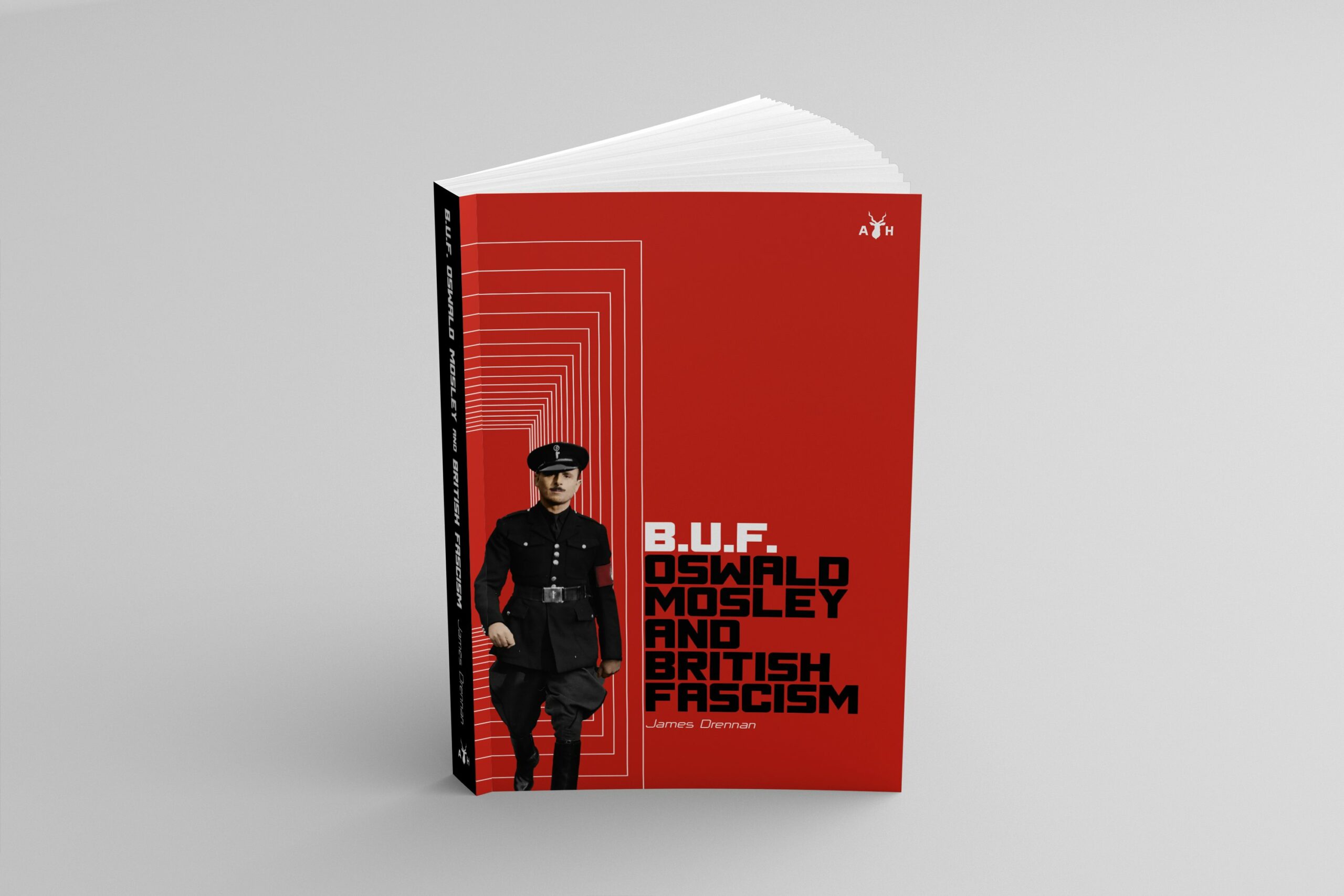
B.U.F. Oswald Mosley and British Fascism by James Drennan
$55.98
$91.81
For six chapters of the book you’re given a background in Oswald Mosley’s life as a member of British government in the early 1920’s. The important aspects to learn are how Mr. Mosley became aware of the inability to solve the major issues of modernity through democracy, who democratic government truly serves (and is orchestrated by) and ultimately how he evolved to become the archbishop of British Fascism. Below these biographical details about the man, what can also be found, in a way, is a theoretical justification on how Fascist action in government would be superior to the gesturing and inefficiency of democratic governance. Besides a background on how Mosley ended up where he made his moment in history, what also is said about him is that of his character. Beginning as a Tory and progressing to the socialist wing of the Labor party, Mosley was routinely praised by his peers in government and the press for his abilities as a leader. “Mosley was a figure of individual strength & purpose… a brilliant & searching mind, a sympathetic temperament.” – The Nation, 1922 and “…the stuff of which Prime Ministers are made” – Lord Beaverbrook. My personal summary of him would be that he was a genuine, pragmatic, and diligent man who became a Fascist not due to megalomania or ulterior motives but personally forged by the evolution of his experiences, his view of the historical process and the absolute unfeigned understanding of what truly was best for the whole of Britain. Again, for six chapters of the book an excellent outline of who and how Oswald Mosley was is given. Yet the most important aspect of this book are the theoretical contributions learned from the last three chapters. Extremely important was the intellectual wrenching out of my cut-and-dry American understanding of historical process, power, and the conception of what a State is or should be. Being given a lens to view history through is something I don’t think many people have. Not to come off as big brained, I simply mean to say it isn’t common sense to understand that understanding history requires a method of analysis. For me, realizing that history was not made based off of morality but instead of power struggles between elites of a society feels like an out of body experience in a way. Seeing the development to democracy in the West not childishly as “the right thing to do” but instead as the process in which an embedded capitalist class was able to remove hindrance (monarchy and mercantilism) to their interest.